PART 1
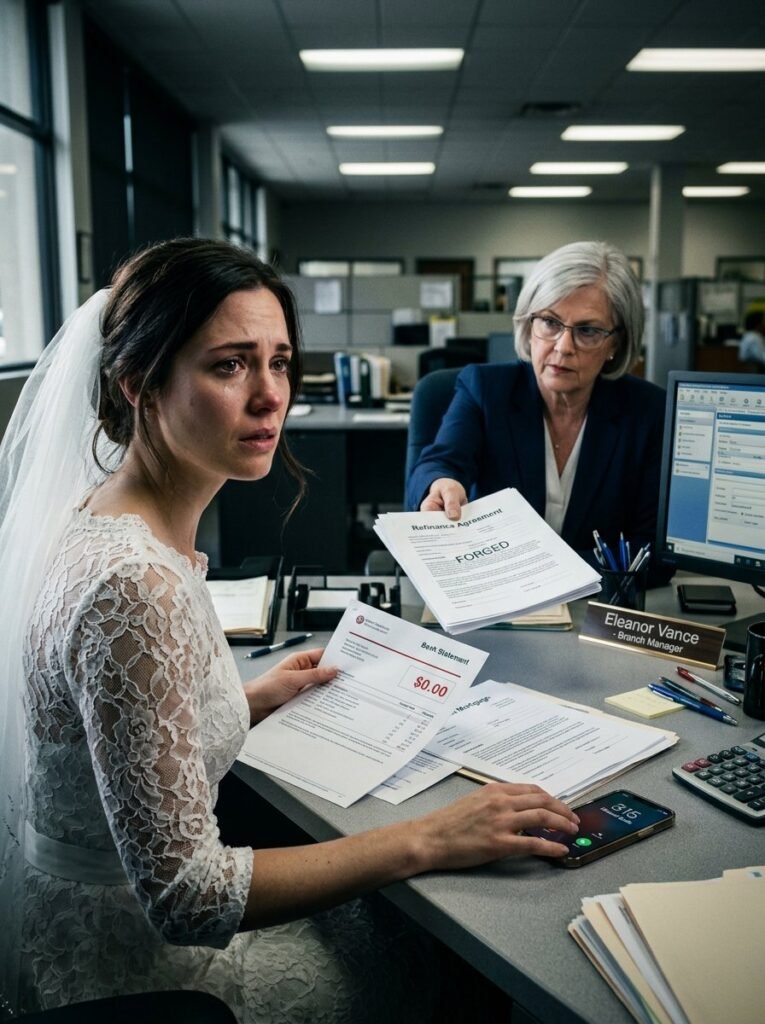
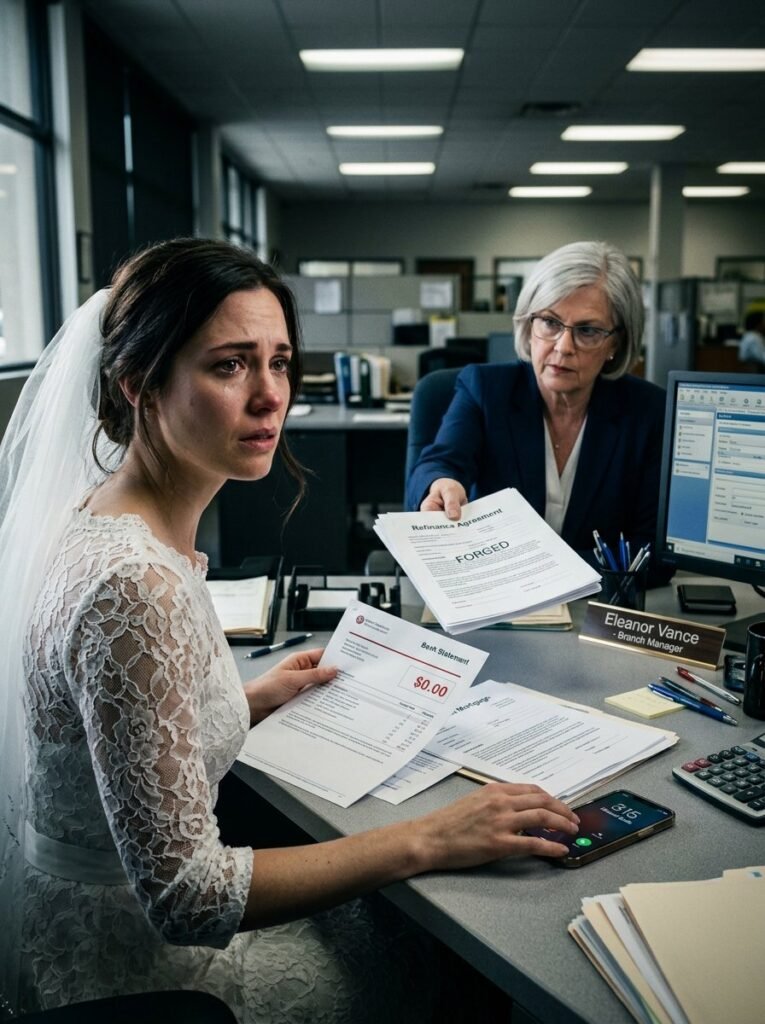
An hour before I walked the chapel aisle, my brother texted: “Sorry, priorities.” My family ditched my wedding, though they flew 10 states for his triplets. For 24 days, I stayed lethally silent, secretly severing my name from their mortgage. On day 25, my phone blew up with 315 calls. My dad shrieked: “The bank froze everything!” The devastation I orchestrated was about to swallow them whole…
My entire family flew across ten states for my brother’s unborn babies.
But they couldn’t drive two hours for my wedding.
That was the sentence repeating in my mind as I stood at the back of the chapel, staring at the empty pews reserved for the people who raised me.
My mother’s seat was empty.
My father’s seat was empty.
My brother Caleb’s seat was empty.
Even my grandmother’s lace handkerchief, the one she promised to bring for “something old,” never arrived.
My fiancé, Andrew, turned from the altar and saw my face before I could hide it. His jaw tightened, but he did not look at the empty seats. He looked only at me, like I was still the whole room.
Three months earlier, my family had flown from Texas to Florida for Caleb and his wife’s gender reveal. Not one baby. Triplets. My mother bought custom shirts. My father paid for first-class upgrades because, in his words, “This is family history.” They stood on a beach at sunset, crying over three clouds of blue smoke like they had witnessed a miracle.
I was happy for them.
I even skipped my own car payment to send money for my parents’ oceanfront hotel suite after Dad said money was tight. I didn’t know the truth about that trip yet.
Then my wedding came one month later.
Two hours away. Same state. Same highway. Same people.
And suddenly, my brother orchestrated the ultimate betrayal.
An hour before I walked down the aisle, Caleb texted the group chat claiming his wife was having intense false contractions. They were “rushing to the ER,” and he demanded my parents stay behind to support them instead of driving to my wedding.
Sorry kiddo. Priorities, he texted.
At the chapel, Andrew’s mother quietly took off her own heirloom pearls and placed them around my neck. She moved flowers onto the empty pews so the photographer wouldn’t capture the absolute abandonment. His father walked beside me halfway down the aisle, then stepped back so I could finish alone with dignity.
During the vows, I did not cry.
When the minister asked who gave me away, I said, “I came here by choice.”
At the reception, my phone buzzed once.
Mom: Hope it was beautiful. Send pictures. Caleb says Madison is resting.
I stared at those words until they blurred. Then, I turned my phone off.
For twenty-four days, I did not call them.
For twenty-four days, they did not notice.
During that time, I looked into the emergency bank accounts I had set up to help my parents, discovered a horrific truth, and made a quiet, permanent decision.
Then, on the twenty-fifth morning, my phone exploded.
315 calls. Text messages. Frantic voicemails.
The first voicemail was from my father, breathless and terrified.
“Lena, call me now! The bank just called. They said you removed your name from the mortgage and the accounts are frozen! What did you do?”
PART 2 — ESCALATION
I listened to that voicemail three times.
My father’s voice, the same man who taught me to change a tire and who once drove through a snowstorm to bring me soup in college, was panicked like I’d never heard him before.
The bank just called. They said you removed your name.
I had. And I had every legal right to.
But to understand why, you have to understand what I found during those twenty-four days of silence.
After the wedding, Andrew and I left for a short two-night stay at a small inn near the chapel. We didn’t have a real honeymoon planned. I had put most of our savings into helping my parents.
For two years, I had been on their mortgage. Not because I wanted to be. Because two years earlier, Dad had a heart scare. He had to stop working for six months. Mom was working part-time at a church daycare. Their mortgage was about to go delinquent.
I was twenty-six, newly promoted, with excellent credit. My parents asked if I would co-sign a refinance to lower their payment, just temporarily, until Dad was back on his feet. My mother cried when she asked. My father said, “We would never put you at risk.”
I said yes. I also set up a separate joint savings account linked to their mortgage, with five thousand dollars at first, then I kept adding. Every extra shift, every bonus, every birthday check I didn’t cash, I dropped in. My name was the primary on that account, but the money was for them. For emergencies. For medication. For that house that held my entire childhood.
I never checked it. I trusted them completely.
On day three after my wedding, I finally logged in.
The balance was forty-seven dollars and eighteen cents.
I stared at it, refreshed the page, logged out and logged back in, thinking it was a glitch. It wasn’t.
I scrolled through the transaction history with my hand over my mouth. Twenty-two withdrawals in the last ninety days. Eighteen thousand, four hundred dollars gone. One for twelve hundred to a boutique baby furniture store in Miami. One for forty-five hundred to Caleb’s contractor, labeled “nursery expansion.” One for three thousand for the oceanfront hotel suite — the one I had already paid for once directly because Dad said money was tight, then you charged again to the emergency fund anyway.
My hands were shaking so hard I could barely hold my phone.
I called the bank and asked to speak with the mortgage advisor, Linda Reyes, who had handled our refinance. I asked her for a full copy of the mortgage file.
She paused. “Lena, are you aware your mortgage was refinanced again four months ago?”
I wasn’t.
She sent me the documents by secure email. My parents had refinanced again six weeks before Caleb’s gender reveal party. This time, the loan was forty thousand dollars larger. And this time, my name wasn’t just co-signer. I was listed as primary borrower.
And at the bottom of page four and page seven, two signatures that were supposed to be mine.
They were forgeries. Clumsy, rushed. The L in Lena looped the wrong way. My real signature has a sharp hook. This one was rounded. I had never signed those pages. I had never even seen them.
The new equity had been used as a down payment for Caleb and Madison to buy a larger house. A four-bedroom with a finished basement for triplets. In the internal notes, my mother had written to the loan officer: “Our daughter is happy to help family. She has excellent credit.”
That’s when I logged into Instagram. I hadn’t looked at social media since the wedding. Caleb’s wife Madison had posted a story the day of my wedding. Not from an ER. From a brunch patio with her sisters. Mimosas on the table. Sun in her hair. Her belly round and healthy. She was laughing. Time-stamped 2:14 p.m. My ceremony started at 3:00 p.m.
The false contractions were a lie to justify staying home.
I didn’t cry then either. I felt something colder and clearer settle in my chest, something every woman over sixty knows well — that moment when you stop making excuses for people.
I called a lawyer that afternoon. A woman named Diane whose website said “Protecting Women From Family Financial Abuse.” I brought her the forged documents, the bank statements, the screenshots of Madison’s brunch.
She read for ten minutes and said four words. “This is financial fraud.”
Under her guidance, I filed an affidavit of forgery, removed myself from the joint savings account, and submitted a formal request to be released from the mortgage due to fraud and forgery. Because my signature had been forged, the bank was legally required to freeze all related accounts pending investigation.
I didn’t do it to be cruel. I did it to stop bleeding.
I spent the next twenty days breathing for the first time in years, helping Andrew unpack our small apartment, looking at the heirloom pearls his mother let me keep in a velvet box.
Then on day twenty-five, the bank’s freeze finally hit them.
And my phone exploded.
PART 3 — CONFRONTATION
I answered on call number three hundred and sixteen.
My mother was sobbing so hard I could barely understand her. “Lena, the mortgage company is here, they put a notice on the door, your father can’t breathe, please, please fix this, please put your name back.”
I told her I would be there in two hours. Andrew drove me. He didn’t try to talk me out of it. He just held my hand the whole drive.
Their house looked smaller than I remembered. The lawn was overgrown. The shutters I had painted with Dad when I was twelve were peeling badly. The same welcome mat I’d bought them was still there, faded.
Inside, my father sat at the kitchen table with his head in his hands. He looked ten years older than he had at Christmas. My mother stood in the kitchen, her eyes swollen red, holding a stack of bank letters she had never opened until now, all marked PAST DUE and URGENT.
“You removed your name,” my father said quietly when I walked in. Not a question. An accusation and a realization in one sentence.
“I removed my name from a loan that had my forged signature on it,” I said. I kept my voice steady. Diane had coached me on this. State facts. No screaming. “You refinanced without telling me. You pulled forty thousand dollars of equity and gave it to Caleb. You drained the emergency account I funded for your heart medication and your roof. That was eighteen thousand four hundred dollars. My money. My future.”
My mother flinched. “We were going to pay you back. Caleb was going to pay us back when his business—”
“Caleb’s business hasn’t made money in three years,” I interrupted. I laid the bank statements on the table, one by one, like evidence in a courtroom. The nursery furniture. The contractor. The hotel that I had already paid for once because Dad said money was tight, then you charged again to the emergency fund anyway. “You told me you were tight on money for the beach trip, Mom. You took money from me twice for the same hotel.”
My father’s shoulders started to shake. “We didn’t know what else to do. Three babies, Lena. Three babies coming and they needed—”
“I needed you at my wedding,” I said. The words came out low, but they filled the whole kitchen. “Two hours. One afternoon. You drove ten states for a smoke party on a beach. You couldn’t drive two hours for your daughter to get married. And you lied about it. You looked me in the eye and lied.”
At that moment, the front door slammed. Caleb walked in with Madison behind him, moving slowly, her belly huge under a loose dress. He looked furious, like I was the one who had done something wrong.
“This is insane,” he said, pointing at me. “You froze our parents’ house over some drama? You’re going to make Mom and Dad homeless because your feelings got hurt about some chairs at a wedding?”
Madison wouldn’t meet my eyes. She stared at the floor at a chip in the tile.
“This isn’t about feelings,” I said. I pulled out my phone and showed him Madison’s brunch photo, time-stamped the hour of my wedding ceremony. “You said she was in the ER. You told Mom and Dad to stay for support. You were at brunch with mimosas. My ceremony was at three. This is two-fourteen.”
Caleb’s face went bright red. “It was a false alarm! We went to brunch after we got cleared. You’re twisting it, you’re always twisting things to be the victim.”
“You texted ‘Sorry kiddo. Priorities,'” I said, my voice finally breaking. “My wedding was not a priority. But my credit score was. My savings were. You made me a priority when you needed my signature.”
My mother started crying harder. “Lena, please. We are family. We can fix this. Put your name back and we’ll figure out payments. We can’t qualify alone, the bank said—”
“That’s the point,” I said. “You can’t qualify alone because you can’t afford this house anymore, and you can’t afford Caleb’s house either. You used me to afford two houses you couldn’t afford. And you never asked me. You forged my name.”
I looked at my father. “Did you know Mom signed my name? Did you watch her do it?”
He didn’t answer for a long time. The clock ticked. Then he nodded, just once, barely. “Your mother thought you would understand. I told her— I told her it was wrong. I told her you would find out.”
That tiny, honest nod was the turning point. Not screaming. Not threats. Just that admission that they knew exactly what they had done and did it anyway.
I felt Andrew’s hand on my lower back. He hadn’t said a word the wholetime, but his presence was the only thing keeping me upright.
I took a breath. “I am not putting my name back on anything. I have filed fraud paperwork. The bank is investigating. What happens now is between you and the bank. I will not co-sign, I will not send more money, and I will not pretend this is okay because there are triplets coming.”
Caleb stepped forward like he was going to grab the papers off the table. Andrew stepped forward too, just one step.
“Don’t,” Andrew said. Quietly. Finally.
Caleb stopped.
I picked up my purse. My hands were finally steady.
“I loved this house,” I said to my parents, looking around at the kitchen where I learned to bake, where Dad taught me math. “But I will not set myself on fire to keep it warm for someone who left me standing alone at my own wedding.”
We walked out. I didn’t look back.
PART 4 — HIGHEST STAKES
The fallout was immediate and vicious and bigger than I had prepared for.
By that evening, my family group chat, which had been silent toward me for a month, exploded without me. My cousin forwarded me screenshots with the caption “I’m so sorry.” My mother had written a long message about how I had “abandoned the family in their greatest moment of need” and how “after everything we did for her, she chose revenge over her own nieces or nephews and her own father’s health.”
No mention of forged signatures. No mention of eighteen thousand dollars. No mention of my empty pews at the chapel. In her version, I was the villain who froze the bank accounts out of spite.
My phone buzzed with numbers I didn’t recognize. Aunts. Uncles. My grandmother, whose lace handkerchief never arrived for my wedding, left me a voicemail saying I was being selfish and that I had always been jealous of Caleb because he could give the family grandchildren more easily.
Andrew turned my phone off and pulled the curtains and held me while I stared at our apartment wall. The pearls his mother had given me were still in their little velvet box on our dresser. I held them like a lifeline.
The next morning, Diane called. The bank’s fraud department had confirmed the forgery after handwriting analysis. My name would be fully released from the mortgage within seven business days, but because the refinance had been done fraudulently, the original mortgage terms were now void under their fraud clause. The bank was pulling the loan entirely. My parents had seventy-two hours to produce proof of new financing or the foreclosure process would formally begin. The freeze on the savings account would remain until the investigation closed. The equity check they gave to Caleb would be clawed back by the bank.
I felt sick. Not victorious. Sick to my stomach. That house had my height marks on the pantry door from 1998 to 2008. It had my mother’s garden. It had my father’s workshop.
But I also felt something else that wouldn’t let me cave. Clarity. Cold, hard clarity. If the bank had not caught the forgery, I would have been legally responsible for a mortgage payment nearly double what I could afford, on a house I didn’t live in, while my parents funneled the equity to my brother who hadn’t even shown up to my wedding.
At 2:00 p.m., my mother showed up at my apartment building. She didn’t come up. She sat in her car in the visitor spot and texted me to look out the window. I did. She was holding a manila envelope against her steering wheel.
Inside were printed photos of my wedding. The photographer had done exactly what Andrew’s mother asked — she had angled every shot to avoid the empty front row. She had cropped tight, used flowers to fill. In the photos, I looked beautiful and completely alone. My mother had written on the back of one in her careful script: “You looked so pretty. I’m sorry we weren’t there. Please don’t take our house. The babies need a place to visit their grandparents.”
I closed the envelope and slid it under my door without opening the door.
An hour later, Caleb called from his wife’s phone. Madison was crying in the background. For real this time. Her blood pressure was high. The doctor had put her on strict bed rest because of stress. The contractor had walked off the job that morning because the last check from my parents had bounced — the check that came from my emergency fund that I had now frozen. The nursery was half-painted, drywall exposed.
“This is on you,” Caleb shouted, his voice cracking. “If Madison loses these babies from stress, that’s on you. You hear me? That’s on you, Lena.”
I hung up. My hands were numb.
At 6:00 p.m., the property manager of my parents’ neighborhood posted in their community Facebook group. I saw it because a neighbor who always liked me sent it to me with a sad emoji. A photo of my parents’ front door with a bright orange notice taped to it, the kind you can see from the street. NOTICE OF DEFAULT AND INTENT TO ACCELERATE. FOREFEITURE IN 30 DAYS. My father’s old work boots sat by the door, the same boots he wore to my high school graduation, to my first car, to everything.
My aunt called screaming that my father couldn’t breathe, that his chest was hurting again, that my mother was too hysterical to drive him to the hospital.
Then at 9:17 p.m., I got two calls at the exact same second that made the entire world stop.
One was from the local hospital. UNKNOWN CALLER.
One was Caleb, leaving a voicemail that cut off mid-sentence, his voice raw panic: “Lena— Dad just collapsed at the bank— he—”
My mother’s last text of the night came at 11:59 p.m., one minute before the bank’s deadline.
“If we don’t have a co-signer by midnight tomorrow, the bank says they list the house for auction. We have nowhere to go with three newborns coming next month. Tell me this is not how you want this to end. Please. Tell me you didn’t want to destroy us.”
I stared at the phone, the hospital still on hold, the orange foreclosure notice glowing in my mind, my father’s empty seat at my wedding suddenly superimposed over his empty chair in the ER, and Madison’s hospital monitor beeping somewhere across town.
PART 5 — RESOLUTION
I answered the hospital call first.
My father was stable.
It was a severe panic attack, not a cardiac event, the ER doctor said. Stress, dehydration, lack of sleep for three days straight, and not taking his blood pressure medication because my mother had hidden the foreclosure notice from him until the bank officer came to the door. He was being kept overnight for observation and would be discharged in the morning with orders to rest and avoid stress.
My mother collapsed into a chair when she heard. Not dramatic. Just folded.
I drove to the hospital. Andrew drove. I didn’t want to go alone.
My father was awake in a curtained bay, pale, smaller than I’d ever seen him. He had oxygen on, but he was talking to the nurse about the weather. When he saw me in the doorway, his eyes filled.
“Lena bug,” he said. My childhood nickname. I hadn’t heard it in ten years. Not since Caleb moved back home and became the center of everything. “You came.”
“I came,” I said.
My mother was slumped in a plastic chair beside him, holding the orange foreclosure notice, now folded and soft from her hands, from folding and unfolding it. When she saw me, she started to cry again, but quietly this time. No performance for a group chat. Just tears.
Caleb wasn’t there. He couldn’t be. Madison had been admitted to a different wing for observation that same night. Real contractions this time, but early. Thirty-two weeks. The babies were okay, she was okay, but she was terrified and on strict bed rest. The triplets were measuring small.
My father looked at me and reached out his hand. I didn’t take it at first. Then I did.
“We messed up,” he whispered. “We really messed up, bug.”
That was the first time anyone had said it. No excuse. No “but the babies.”
My mother nodded, her voice hoarse. “We did. We thought— Caleb’s wife’s parents have money. Big money. We thought we had to keep up. Your father thought if we didn’t help them get the big house, they’d move to Florida near her parents. We would never see the babies. We used you because you were the only one who always said yes without making us feel bad. And then we punished you for saying no once by not coming to your wedding. I am so sorry we weren’t there. I am so sorry.”
“I always said yes because I thought if I was helpful enough, you would love me the same,” I said. I wasn’t trying to be cruel or to wound them while they were down. I was just finally telling the truth out loud after thirty years of swallowing it. “I thought if I paid for things, you would choose me too.”
My father closed his eyes. Tears slipped down his temples into his hair.
Diane had told me exactly what to say if this moment came. No emotion, just facts. No new promises, no co-signing, no transfers. Boundaries are not punishments, she had told me. They are consequences. And consequences are not revenge.
“I am not putting my name back on any loan,” I told them calmly, sitting down. “I have removed all my money from any joint account. My credit is now separate and the fraud flag is on your file. The bank will give you thirty days from today to vacate if you cannot refinance. I have found three rental agencies that work with low-credit seniors and a housing counselor at the bank who will meet you tomorrow for free. I will drive you there if you want. I will sit with you. I will help you pack. I will not pay for your house. I will not co-sign anything ever again.”
My mother reached for my hand across my father’s bed. I let her hold it for a second, then gently pulled it back. Not cruel. Clear.
“And Caleb?” she whispered. “His house— the sellers pulled out this morning because our check bounced and the bank clawed back the equity. He has nowhere big enough for—”
“Caleb is thirty-four,” I said. “He will figure it out. Just like I did when my family didn’t show up to my wedding and I still walked down the aisle anyway.”
My father let out a sound that was half sob, half laugh, painful to hear through the oxygen. “Your wedding. God, Lena. When Andrew’s father walked with you partway, I saw the photos your aunt sent. He did what I should have done. I should have been there.”
“He did what you chose not to do,” I said, and my voice was soft.
We stayed until the nurse kicked us out at midnight.
Over the next month, what I said would happen, happened, exactly as Diane predicted.
My parents could not refinance. Their debt-to-income with the extra forty thousand was too high, and without my credit, no bank would touch them. Their credit had already been damaged by missed payments they hid from me. They listed the house. It sold in eleven days, well below what they had hoped, because it had the same peeling shutters and overgrown lawn and now a public notice of default attached to its county record.
The sale paid off the fraudulent loan and left them just enough for first, last, and security on a two-bedroom apartment near my mother’s church. Smaller. Ground floor. No workshop for Dad. No pantry door to measure grandkids on. But safe. And theirs, truly theirs.
Caleb and Madison lost the big four-bedroom. The seller kept their earnest money because their financing collapsed when the bank clawed back the down payment. They moved into a two-bedroom rental townhouse instead, with the nursery in the living room, with cheap dressers instead of custom built-ins. Madison delivered at thirty-five weeks. Three tiny girls, healthy, screaming, beautiful — Sophia, Grace, and Maya. I sent a card with their names. I did not send money. I did not visit in the first week. I waited until I was invited.
My credit score jumped thirty-four points the month my name was fully released. Diane helped me file identity theft protection and a permanent freeze so no one could ever open anything in my name again. The bank formally blacklisted my parents from opening any joint accounts in my name.
My extended family split right down the middle. Half stopped speaking to me after my mother’s first Facebook post. The half that mattered started calling more. My grandmother, after a month of silence, mailed me her lace handkerchief with a note: “For your future daughter. I should have brought it.”
Last Sunday, Andrew and I had dinner with his parents. His mother wore the same pearls she had given me on my wedding day, the ones she let me keep. His father asked me about work and listened. No one talked about mortgages or triplets or empty pews or escrow. We just ate roast chicken and laughed about Andrew burning the rolls.
After dinner, Andrew brought out our wedding album. The photographer had done her best, but you could still see it if you knew where to look — the way the flowers were bunched a little too thick on the left side, to cover what wasn’t there, the way the light fell on two empty rows.
I looked at that photo for a long time, at myself standing alone at the top of the aisle in my mother’s missing handkerchief, Andrew’s mother’s pearls around my neck, no father beside me, no mother crying in the front row, no brother.
And for the first time, I didn’t see abandonment.
I saw a woman who kept walking anyway.
I came here by choice, and for the first time in my life, I finally meant it in every part of my life.